
This page contains affiliate links. As an Amazon Associate I earn from qualifying purchases. It never changes which books I recommend.
Hello from Tokyo. I’m Moeno Morimoto, and I run Chapters, a small bookshop and book-matching service.
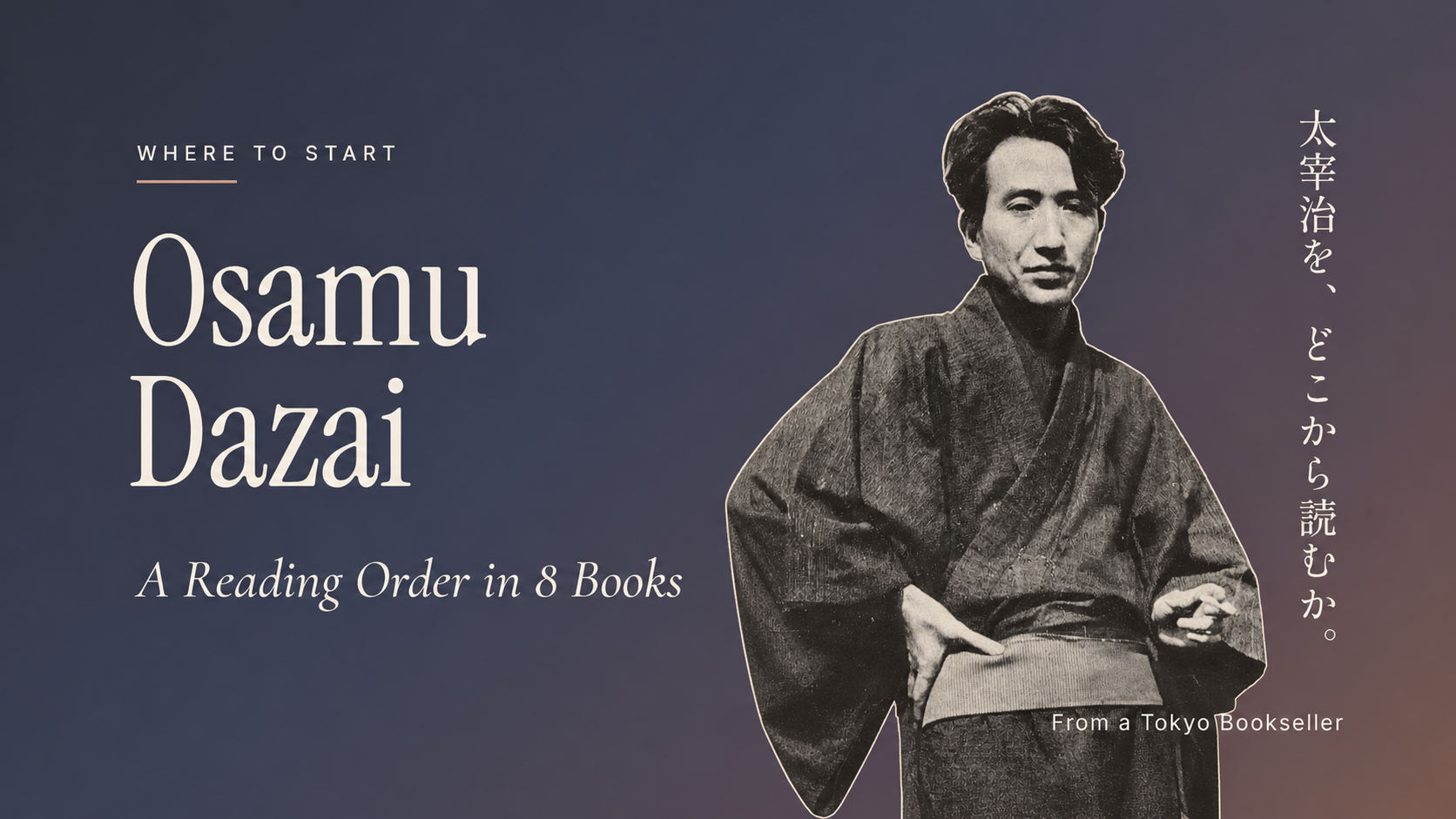
Osamu Dazai is one of the most read authors in Japan, and in the last few years he has found a whole new generation of readers abroad, many of them through the anime Bungo Stray Dogs, where a character is named after him. Then they pick up No Longer Human, and it can be a lot.
So here is a gentler way in: where to start with Osamu Dazai, with a reading order of 8 books in English, from his short, surprisingly warm stories to the famous dark classics.

About me|Moeno
I’m a bookseller at Chapters bookstore, in my thirties in Japan. After working at Dentsu, I opened Chapters in 2020, and in 2025 Chapters was featured on NHK WORLD-JAPAN’s BIZ STREAM, where I was interviewed in English, and on TV Tokyo’s business documentary Cambria Palace. During the pandemic, I left my company job and started a small online bookstore devoted to hand-picked books. Today I also have a shop in Ichigaya, Tokyo.
A homestay in Seattle when I was ten made me dream of the world beyond Japan. At twenty I spent a year studying in London; later I worked for a French company, and recently I got married in Paris. I love living in Japan while feeling close to the rest of the world.
That’s why I started this blog: to share the beauty of Japanese literature with as many readers outside Japan as I can. My favorite hobby? Reading wherever I’m traveling.
If you like the books in this article, please subscribe to my YouTube channel, where I talk about books too.
 楽しい本と書店員📖小説ご紹介 / TOKYO BOOKSTORE GIRLS TUBEBooksellers in Tokyo introducing novels that are easy to read and fun to talk about.youtube.com/@chapters.bookstoreSubscribe

I’m also a novelist. My novel Entrepreneur Days(あすは起業日!) is a workplace novel about a woman giving everything to her work in Tokyo, based on my own experience of opening my bookstore. It was published by Shogakukan in 2024 (Amazon Japan), and I’m hoping it will one day be translated into languages around the world. If you’re interested, I’d be happy to share an English proof. Please email pr@missionromantic.com with a few details about yourself.
A note on this guide: it is built on how Dazai is read in Japan, where most people meet him at school through “Run, Melos!”, and on the English translations available today. Descriptions are based on the books and their publishers’ information.
Osamu Dazai reading order at a glance
| Step | Book | What it is |
|---|---|---|
| Step 1 | Run, Melos! and Other Storiestr. Ralph F. McCarthy | Short stories · Easy entry |
| Step 2 | Schoolgirltr. Allison Markin Powell | Novella · One day · Inner voice |
| Step 3 | The Setting Suntr. Donald Keene | Novel · Postwar · Family |
| Step 4 | No Longer Humantr. Donald Keene | Novel · Confessional · Dark |
| Step 5 | A Shameful Lifetr. Mark Gibeau | New translation of No Longer Human |
| Step 6 | Otogizoshi: The Fairy Tale Book of Dazai Osamutr. Ralph F. McCarthy | Retold folk tales · Funny |
| Step 7 | Return to Tsugarutr. James Westerhoven | Travel memoir · Northern Japan |
| Step 8 | The Flowers of Buffoonerytr. Sam Bett | Early novella · Autobiographical |
Who was Osamu Dazai?
Osamu Dazai (1909–1948) was born Shuji Tsushima into a wealthy landowning family in Tsugaru, at the northern tip of Japan’s main island. He moved to Tokyo, studied French literature, and became famous for fiction that seemed to confess everything: drinking, debts, failed relationships and a deep sense of not belonging.
He was also funny, warm and endlessly inventive, which is easy to forget if you start with No Longer Human. He died in 1948, at 38, shortly after finishing it. Every year on June 19, readers still gather in Mitaka, Tokyo, for Ōtō-ki, the “cherry day” named after one of his last stories.
Before you start: 3 tips
- Don’t start with No Longer Human. It is his most famous book, but it lands harder once you know his lighter voice.
- Read the short stories. Many of Dazai’s best works are under 30 pages. They’re the fastest way to see his range.
- The narrator is not always Dazai. He loved to blur himself and his characters. Part of the fun is spotting the performance.
Where to start with Dazai: 8 books in order
Step 1: Start short
Short stories · Easy entry
Run, Melos! and Other Stories
Original Japanese title: 走れメロス
A collection built around “Run, Melos!”, the story of a man who races against time to save the friend who stood hostage for him. Almost every Japanese student reads it at school.
Why read itMost people think of Dazai as the gloomy author of No Longer Human, and then they read “Run, Melos!” and meet a completely different writer: warm, fast, almost heroic. Starting with short stories lets you hear his voice before you take on the heavy books.
Read it ifYou are new to Dazai, or new to Japanese classics.
Get your copyIn Japan? Buy on Amazon.co.jpStep 2: Hear his voice
Novella · One day · Inner voice
Schoolgirl
Original Japanese title: 女生徒
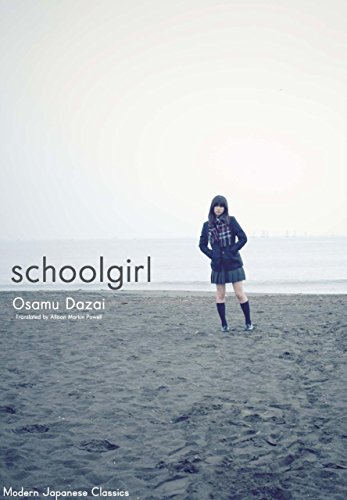
One ordinary day in the life of a teenage girl, from waking up to falling asleep, told entirely in her restless, contradictory inner voice.
Why read itDazai wrote it from a real young woman’s diary, and it still feels startlingly modern: the mood swings, the self-criticism, the sudden joy. It is short, and it shows off the confessional voice that made him famous better than any summary can.
Read it ifYou like interior monologues and short, intense reads.
Get your copyIn Japan? Buy on Amazon.co.jpStep 3: The postwar classic
Novel · Postwar · Family
The Setting Sun
Original Japanese title: 斜陽
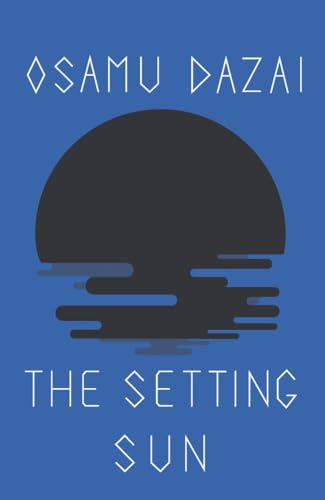
After the war, an aristocratic mother and daughter lose their Tokyo home and move to the countryside. The daughter, Kazuko, decides to live by her own rules as the world she grew up in falls away.
Why read itThis was Dazai’s big bestseller in 1947, and the word “shayozoku” (people of the setting sun) entered Japanese to describe declining aristocrats. Read it before No Longer Human: it has the same darkness, but also a heroine who fights back.
Read it ifYou want a full novel with a strong female lead and a vivid picture of postwar Japan.
Get your copyIn Japan? Buy on Amazon.co.jpStep 4: The famous one
Novel · Confessional · Dark
No Longer Human
Original Japanese title: 人間失格
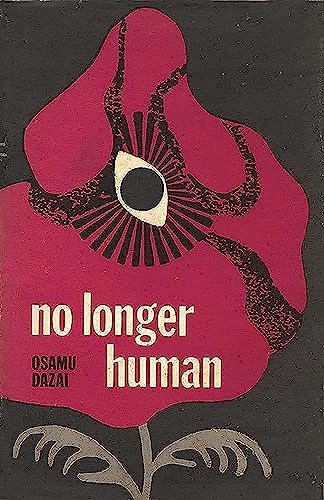
Through three notebooks, a man named Yozo describes a life spent hiding behind clowning, unable to understand other people or feel he belongs among them.
Why read itOne of the best-selling novels in Japanese history, and the reason most readers search for Dazai today. It is bleak, but also oddly funny and painfully honest, and many readers say it described something they had never seen in print. Come to it after a few of his lighter works and you will notice how much of Dazai is performance.
Read it ifYou are ready for the heavy classic. If you are going through a hard time yourself, it is fine to save it for later.
Get your copyIn Japan? Buy on Amazon.co.jpStep 5: Same book, new translation
New translation of No Longer Human
A Shameful Life
Original Japanese title: 人間失格
A 2018 translation of the same novel as No Longer Human, by Mark Gibeau.
Why read itDonald Keene’s 1958 translation is the classic, but some readers find this newer version closer to the raw, conversational tone of the Japanese. If No Longer Human stayed with you, reading a second translation is a great way to see how much a translator shapes a book.
Read it ifYou loved (or struggled with) No Longer Human and want to read it again.
Get your copyIn Japan? Buy on Amazon.co.jpStep 6: Dazai the storyteller
Retold folk tales · Funny
Otogizoshi: The Fairy Tale Book of Dazai Osamu
Original Japanese title: お伽草紙
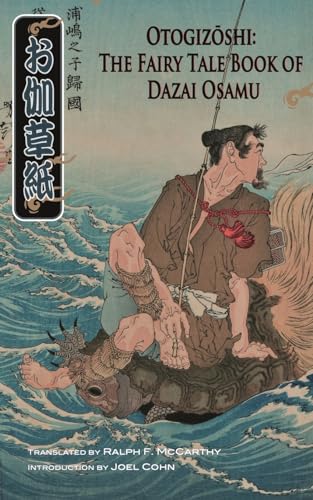
Written during air raids, Dazai retells famous Japanese folk tales, like Urashima Taro and the tongue-cut sparrow, as if he were reading them aloud to his daughter in a bomb shelter.
Why read itThis is Dazai at his most playful, and it might be the biggest surprise for readers who know only No Longer Human. The original tales are short, and Dazai’s versions add asides, jokes and very human characters.
Read it ifYou want to see how funny Dazai can be, or you love folklore.
Get your copyIn Japan? Buy on Amazon.co.jpStep 7: Travel with Dazai
Travel memoir · Northern Japan
Return to Tsugaru
Original Japanese title: 津軽
In 1944, Dazai travels back to Tsugaru, his home region at the northern tip of Honshu, visiting old friends and the woman who raised him as a child.
Why read itMany Japanese readers call this their favorite Dazai: warm, funny, full of sake and old friends, and ending with one of the most moving reunions in Japanese literature. If you are planning a trip to Aomori, read it first.
Read it ifYou like travel writing, or you’re heading to northern Japan.
Get your copyIn Japan? Buy on Amazon.co.jpStep 8: Go deeper
Early novella · Autobiographical
The Flowers of Buffoonery
Original Japanese title: 道化の華
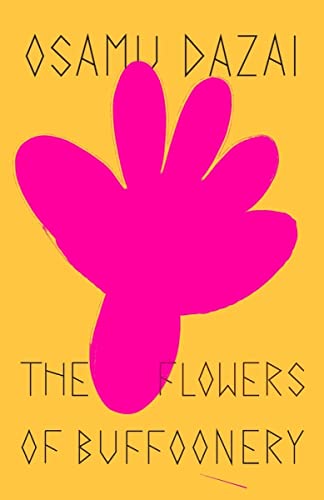
At a seaside sanatorium, Yozo Oba (the same name as the narrator of No Longer Human) recovers from a double-suicide attempt, while his friends and visitors try hard to keep things light.
Why read itAn early work that shows where No Longer Human came from, and how Dazai was already turning his own life into fiction, interrupting his own story to comment on it. Best read once you know his later books.
Read it ifYou’ve read the famous ones and want to understand how Dazai became Dazai.
Get your copyIn Japan? Buy on Amazon.co.jpMore Dazai in English
- Self-Portraits (tr. Ralph F. McCarthy): Stories that trace a writer’s fall, rise to fame, and fall again. Dazai turning his own life into fiction.
- Blue Bamboo: Tales of Fantasy and Romance (tr. Ralph F. McCarthy): Fantastical stories, many based on old Chinese and Japanese tales.
- Crackling Mountain and Other Stories (tr. James O’Brien): A wide-ranging collection, including another retold folk tale.
- Early Light (tr. Ralph F. McCarthy and Donald Keene): Three stories, including “One Hundred Views of Mt. Fuji” and “Villon’s Wife”. A great short sampler.
- No One Knows (tr. Ralph F. McCarthy): Fourteen stories narrated by women. The perfect next step if you loved Schoolgirl.
Osamu Dazai’s major works in order of publication
| Year | Japanese title | English title | Translator / note |
|---|---|---|---|
| 1939 | 女生徒 | Schoolgirl | Allison Markin Powell |
| 1939 | 富嶽百景 | One Hundred Views of Mt. Fuji | In Early Light |
| 1940 | 走れメロス | Run, Melos! | Ralph F. McCarthy |
| 1944 | 津軽 | Return to Tsugaru | James Westerhoven |
| 1945 | お伽草紙 | Otogizoshi | Ralph F. McCarthy |
| 1947 | ヴィヨンの妻 | Villon’s Wife | In Early Light |
| 1947 | 斜陽 | The Setting Sun | Donald Keene |
| 1948 | 人間失格 | No Longer Human / A Shameful Life | Donald Keene / Mark Gibeau |
| 1948 | グッド・バイ | Goodbye | Unfinished |
Dazai places in Japan
If you’re traveling, two places are worth the trip. In Goshogawara, Aomori, his family’s grand house is now the Shayokan museum, named after The Setting Sun. In Mitaka, western Tokyo, where he lived his last years, there is a small Dazai Osamu Literary Salon near the station. Pair the trip with Return to Tsugaru, and see my list of books set in Japan for more.
Osamu Dazai: FAQ
Which Osamu Dazai book should I read first?
Start with the short stories in Run, Melos! and Other Stories, then the novella Schoolgirl. They show his warmth and humor before you take on The Setting Sun and No Longer Human.
Is No Longer Human a good first Dazai book?
It’s the most famous, so many people start there. But it is very dark, and it reads differently once you know his lighter works. If you do start with it, follow it with something like Return to Tsugaru or Otogizoshi to meet the other Dazai.
What is the difference between No Longer Human and A Shameful Life?
They are two English translations of the same novel, Ningen Shikkaku. No Longer Human is Donald Keene’s classic 1958 translation; A Shameful Life is Mark Gibeau’s 2018 translation.
Is Dazai in Bungo Stray Dogs based on the real Osamu Dazai?
The character is named after the real writer and borrows details from his life and works, like his fascination with death and his famous books. The real Dazai is much more varied and funnier than his reputation, which is a good reason to read beyond No Longer Human.
Are Osamu Dazai’s books available in English?
Yes. His major novels and many short stories have been translated, and new translations keep appearing, including several from New Directions in recent years.
More from a Tokyo bookseller
 Japanese Literature: Where to Start12 novels sorted by mood, from classics to modern bestsellers.
 Where to Start with Haruki MurakamiA 5-step reading order, plus all his novels in order of publication.
 Japanese Nobel Prize Winners in LiteratureWhere to start with Kawabata, Ōe and Asia’s other laureates.
 Must-Read Books: 22 Picks from a Tokyo BooksellerWorld classics and Japanese novels to read once in your life.